
Singapore, China, USA, Vietnam, Brazil
Our Core Services
Critical & Strategic Minerals Research
Advancing sustainable extraction and processing technologies.Green Metallurgy Innovation
Research centers focused on low-carbon, high-efficiency metallurgical solutions.Mineral & Metal Trading
Global sourcing and commodity trading for essential minerals and metals.Investment & Project Development
Supporting strategic mining, materials, and clean-technology projects worldwide.Green Metallurgical Technology Services
Process design, optimization, and full-cycle recovery solutions.
Featured Products
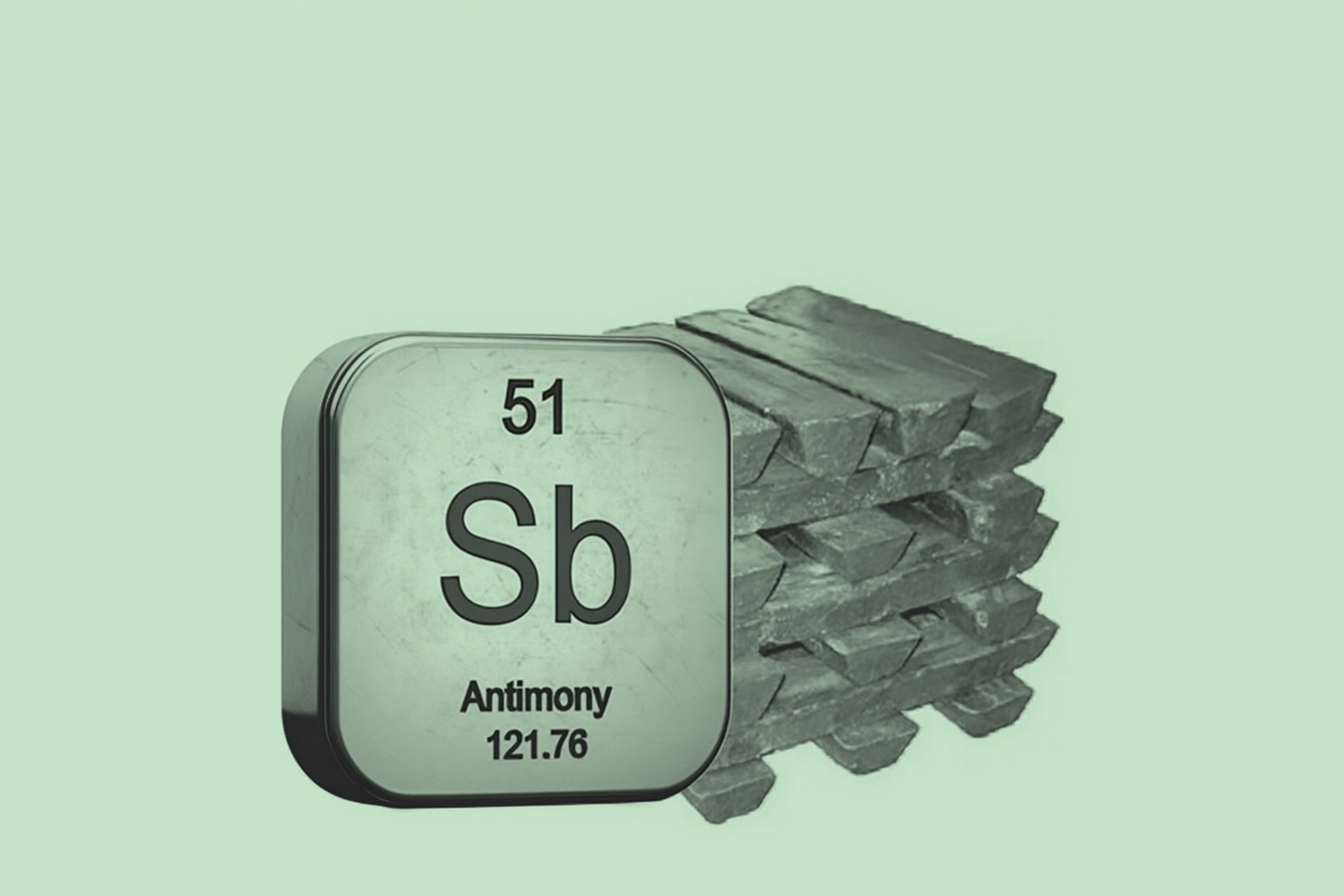
ANTIMONY INGOT 99.65%
Antimony ingot is the refined metallic form of antimony (Sb), cast into standardized ingots for easy transport, storage, and melting.
It is produced mainly from stibnite ore (Sb₂S₃) via smelting and refining.
Typical purities:
• 99.65% Sb (Grade 2) — standard commercial quality
• 99.85% Sb (Grade 1)
• 99.90%+ Sb (High purity)
Chemical & Physical Properties
Property Typical Value
Chemical symbol Sb
Atomic number 51
Purity 99.65% min
Color Silvery-white metal, brittle, crystalline
Melting point 630.6°C
Density 6.68 g/cm³
Boiling point 1,587°C
Crystal structure Rhombohedral
Impurity elements:
As, Fe, Cu, S, Se, Pb, Bi — typically controlled in the COA.
Standard Packaging
Common antimony-ingot packaging used in the U.S., Europe, and Asia:
• 25 kg ingots
• Strapped bundles
• Or 1-ton jumbo sack containing multiple ingots
• Palletized and shrink-wrapped
• ISPM-15 heat-treated pallets required for U.S. import
Applications of Antimony Ingot
1) Flame Retardants
The largest use — antimony is used as a synergist with halogenated flame retardants.
2) Lead-Acid Batteries
Antimony is alloyed with lead to:
• Strengthen battery plates
• Improve charge retention
• Increase cycle life
3) Ammunition / Lead Alloys
Antimony is critical for hardening lead in:
• Bullets
• Shots
• Metallurgical alloys
4) Metallurgical Alloys
Used in:
• Bearing metals
• Solder
• Cable sheathing
• Sb–Sn, Sb–Cu, Sb–Pb alloys
5) Chemicals production
Feedstock for producing:
• Antimony trioxide (ATO)
• Sodium antimonate
• Antimony pentoxide
Specifications (Typical)
For 99.65% Sb ingot (commercial grade):
Element Max (%)
Sb 99.65 min
As 0.15
Pb 0.10
Fe 0.02
S 0.04
Cu 0.02
Se 0.005
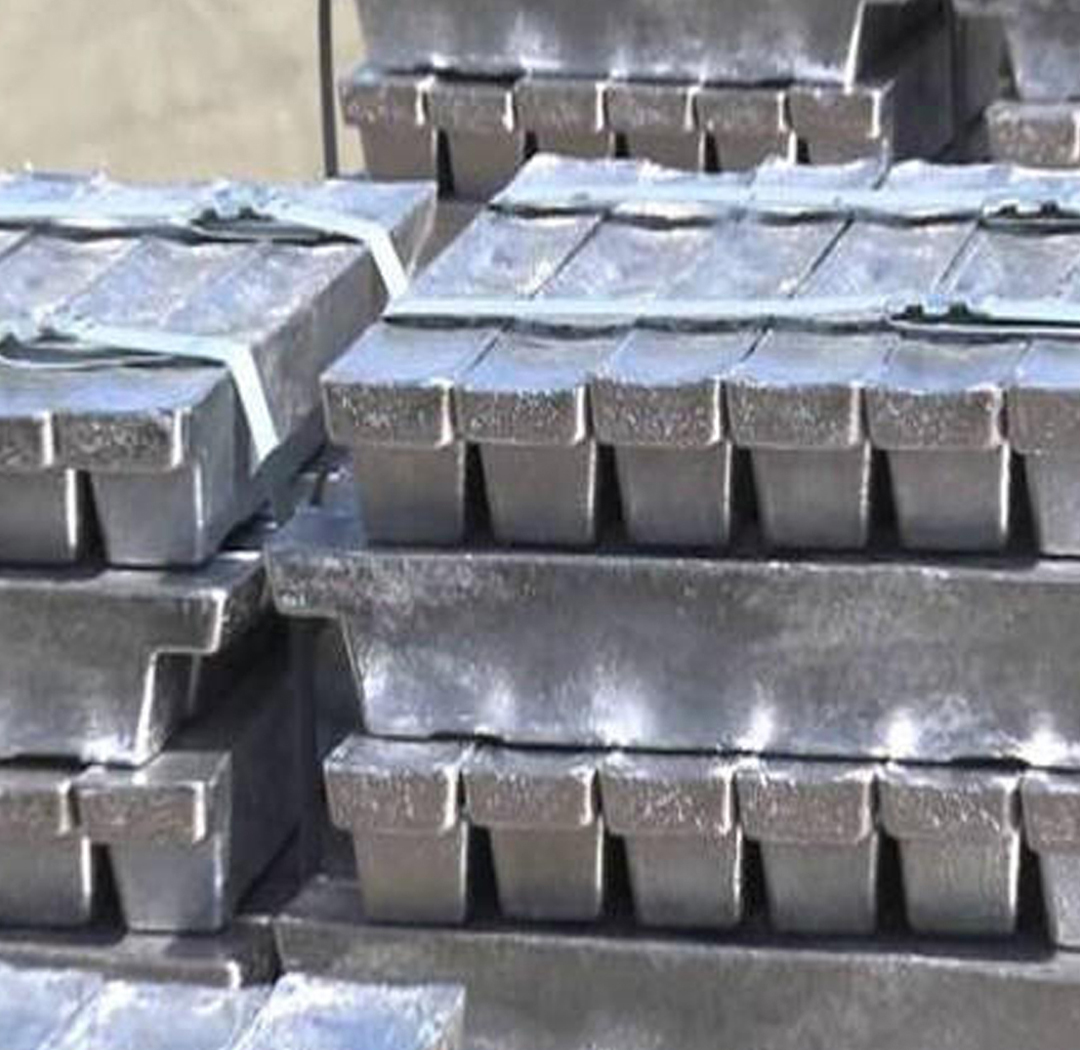
Antimony alloys are alloys of antimony with other metals, such as lead and tin, that are used to increase the hardness, strength, and corrosion resistance of the base metal. Very common alloys include antimonial lead, used in lead-acid batteries, solder, and bullets, and antimony-tin alloys, which are used in bearings and pewter making. Antimony's ability to harden lead is crucial for applications like storage batteries where it improves the rigidity of the plates.
Common antimony alloys
An alloy of lead and antimony, which is much harder and more durable than pure lead.
· Applications: Lead-acid batteries, solder, and bullets.
· Properties: It allows molten lead to fill casting molds better, while also increasing corrosion resistance.
Used in applications where hardness, strength, and wear resistance are important.
· Applications: Bearings, type metal, and pewter.
Used to improve the properties of aluminum alloys.
· Applications: Used to enhance the strength, ductility, and machinability of the final aluminum-based product.
Other applications of antimony alloys
· Munitions:
Antimony makes lead-based ammunition stronger and harder, which improves its accuracy and effectiveness.
· Cable Sheathing:
Used to provide durability and corrosion resistance.
· Bearings:
Antimony alloys are used in plain and other types of bearings to improve their mechanical properties and reduce friction.
· Foil, sheets, and pipes:
Antimony enhances the mechanical strength and corrosion resistance of lead in these products.
Tin-Antimony plating Alloy
We can provide tin-antimony alloy plating which has the following properties:
Pb-free solder plating
Solder composited uniformly by Sn-5% Sb having a melting point of 235 degree C
Material used for soldering at multi-temperatures
Good reliability for connection strength at hot environmentPb-free Sn-Sb solders plating having uniform composition. Antimony content is 5% of plus or minus 3%.
Functional property: Good Bondability and High Temperature Solder
Industry employed: Sensors
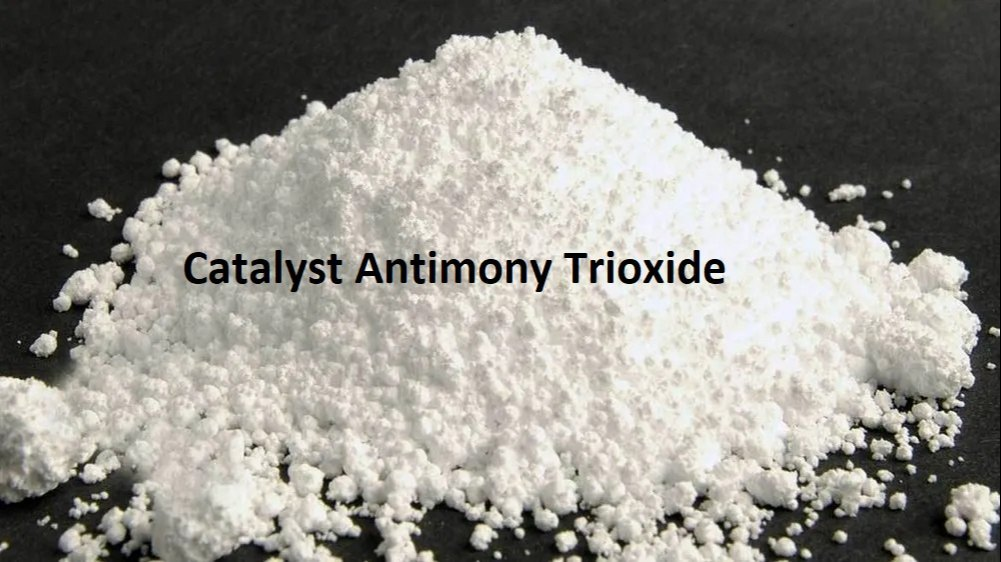
Typical applications for antimony trioxide include flame retardant synergist for use in plastics, rubber, paints, paper, textiles, and electronics; polyethylene terephthalate polymerization catalyst; a clarifying agent for glass; an opacifier for porcelain and enamel; and a white pigment for paint.
Product information
Sb2O3 (min) 99.5 % 99.8 % 99.9 %
Sb+3 (min) 83.6 % 83.8 % 83.9 %
Arsenic, As (max) 0.10 % 350 ppm 20 ppm
Lead, Pb (max) 0.10 % 425 ppm 20 ppm
Iron, Fe (max) 60 ppm 40 ppm 15 ppm
Selenium, Se (max) 30 ppm 30 ppm 10 ppm
Bismuth, Bi (max) 30 ppm
Copper, Cu (max) 30 ppm
Tin, Sn (max) 20 ppm
Sodium, Na (max) 100 ppm
Nickel, Ni (max) 30 ppm
Average Particle Size 1.6 – 3.0 μ 0.2 – 2.0 μ 2.0 – 5.0 μ
Our Services
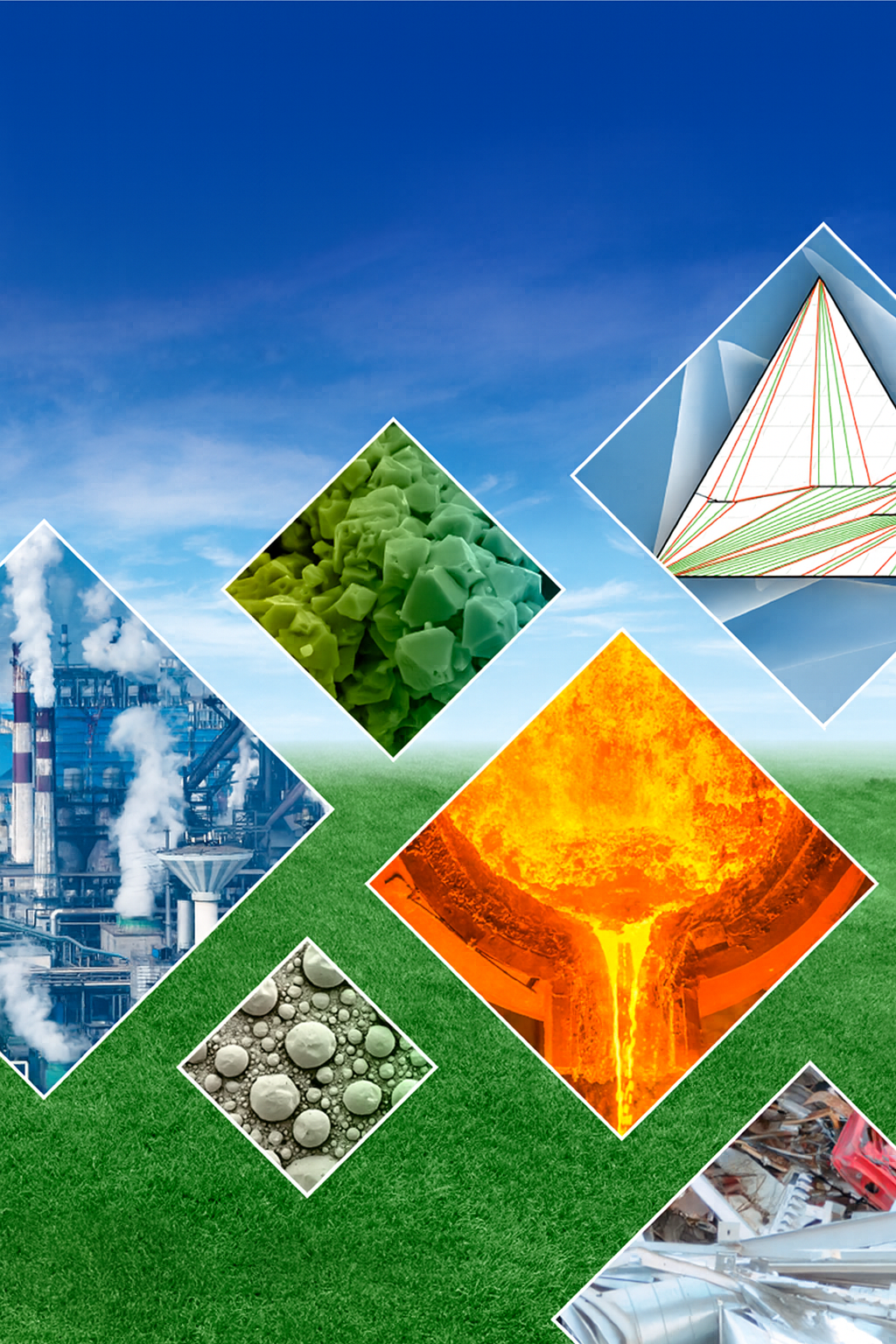
Our center is dedicated to advancing next-generation, low-carbon, and environmentally responsible metallurgical technologies. We focus on greener, safer, and more efficient metal production through the following innovations:
1. Vacuum Metallurgy
High-purity metal refining conducted under controlled vacuum conditions.
2. Microwave Metallurgy
Advanced metallurgical reactions driven by microwave or electron-based energy fields.
3. Bio-metallurgy
Metal extraction and processing utilizing biological systems and eco-friendly media.
4. Short-Process Metallurgy
Integrated, continuous, and one-step metallurgical routes—including combined beneficiation–smelting flows and continuous casting and rolling.
Our Core Capabilities & Technical Services
As an international engineering center, we provide comprehensive technical solutions across the full metallurgical value chain:
Process Development & Engineering
Design and development of next-generation metallurgical processes
Front-end process design for sponge iron and iron powders
Vacuum Metallurgy Technologies
Vacuum smelting technologies and equipment for tin, lead, silver, and other non-ferrous metals
Advanced Alloy Metallurgy
Short-process metallurgy for titanium alloys
Microwave metallurgy for magnesium alloys
Short-route processes for nickel–iron alloys
Metallurgical technologies for cadmium and indium alloys
Resource Recovery & Extraction
Precious metal separation, refining, and high-efficiency extraction
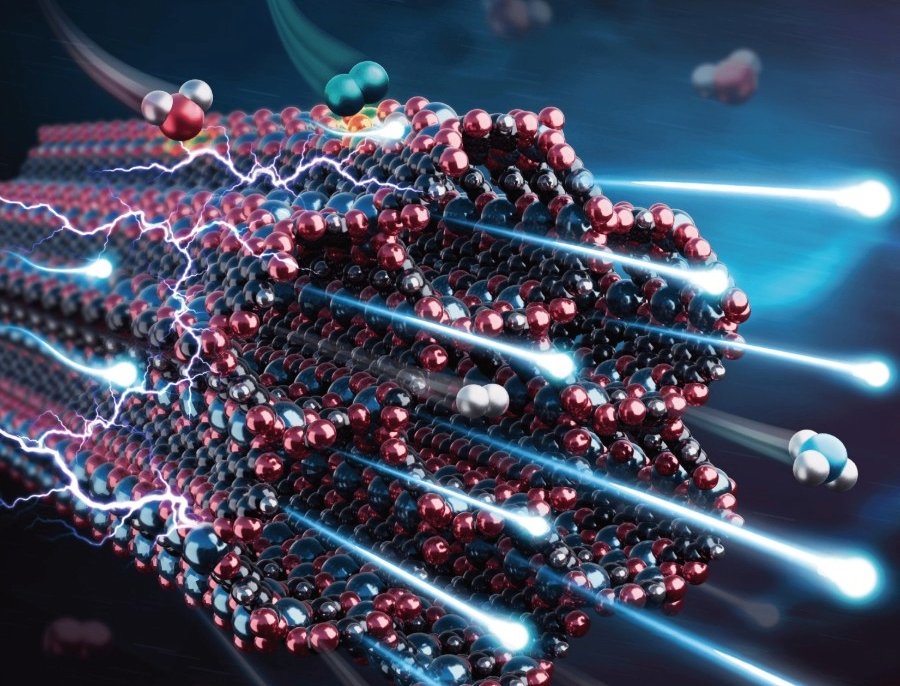
Our center focuses on advanced research, process development, and application engineering for a wide range of metal-based materials essential to modern industry. We work across the full value chain—from raw material processing to high-performance alloy development—supporting global manufacturing, energy, aerospace, and emerging technologies.
Metal-Based Materials
1. Base Non-Ferrous Metals
Aluminum and alloys
Nickel and alloys
Tin, Lead, Zinc
2. Minor Metals
Cr, Co, Ca, Mn, Si, Re
Ga, In, Te, Ge, Tl, Se
Sb, Bi, Li, Cs, Rb
3. Rare & Precious Metals
Rare earth metals
Precious metals: Au, Ag, Ru, Os, Rh, Pd, Pt
4. High-Temperature & Hard-to-Melt Metals
Tungsten and alloys
Molybdenum and alloys
Tantalum and Niobium
Vanadium and Zirconium
Advanced and New Materials
Advanced inorganic materials
Ceramic materials
High-purity metals
Complex oxide materials
Nano materials
3D-printing functional materials
Aerospace specialty alloys
New generation catalysts
Organometallic compounds
New energy materials
Biomedical materials
Novel construction materials and composites
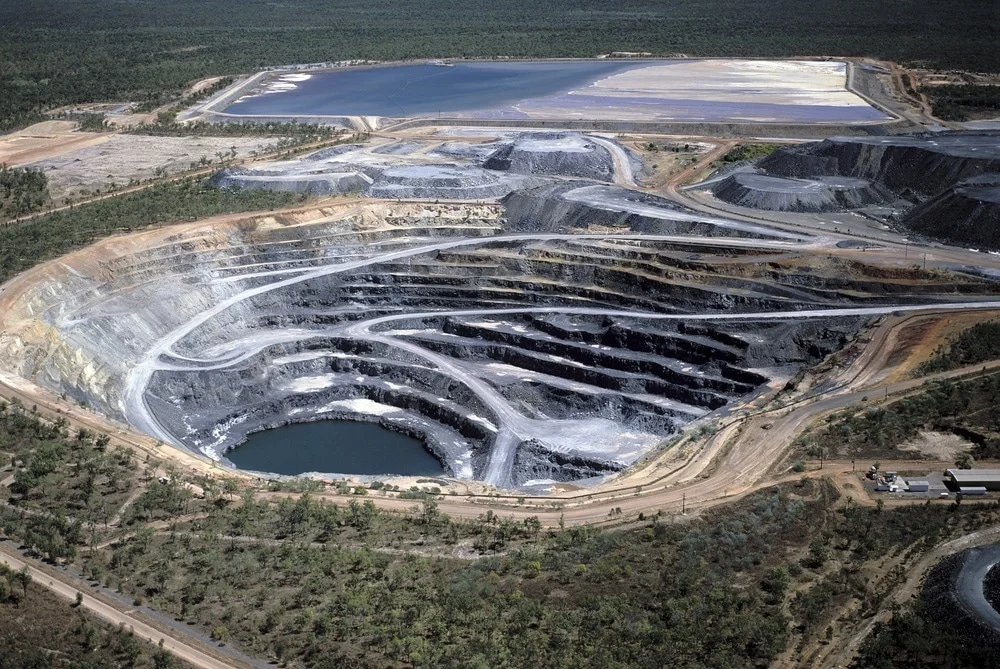
CMI is a specialized research institute dedicated to the metallurgical processes and equipment used for complex ores and multi-metal raw materials. By integrating multiple technical pathways and interdisciplinary methodologies, the institute develops advanced approaches for processing complex materials, optimizing metallurgical flows, and designing innovative technologies and equipment.
Key Research Areas & Capabilities
1. Comprehensive Metal Recovery Technologies
Developing processes that enable efficient extraction and high-yield recovery from complex, low-grade, or refractory metal resources.
2. Integrated Metallurgical Process Engineering
Design of combined routes—pyrometallurgy, hydrometallurgy, electrometallurgy—to achieve optimized, cost-effective, and environmentally friendly metal production.
3. New Material-Oriented Metallurgical Technologies
Supporting the metallurgical requirements for next-generation functional materials, including high-purity metals, advanced alloys, and strategic materials.
4. Strengthened Metallurgy Technologies
Research and application of enhanced metallurgical techniques such as high-pressure infiltration, accelerated reactions, and advanced thermal treatment for improved efficiency and quality.
Follow us on social